Tango in Buenos Aires: classes and first milongas
Book a beginner class for your first tango night in Buenos Aires, or pick a milonga with a lesson before social dancing. Use the city’s milonga directory to find venues by day, neighbourhood and class availability.
Updated · 5 min read
The short version
- Find a milonga
- City directory filters by day, neighbourhood and classes.
- Central school
- Escuela Mundial de Tango is at Florida 656.
- Palermo option
- City directory lists La Viruta at Armenia 1366.
- Dance invitation
- Cabeceo is an invitation made with eye contact and a nod.
Book a beginner tango class, then head to a milonga that teaches before the social dancing starts. Use the city’s milonga finder to filter by day, neighbourhood and classes. You’ll arrive at a floor that expects learners.
Where to take your first class
Escuela Mundial de Tango runs regular in-person classes at Florida 656, first floor, in central Buenos Aires. Find current contact details on its contact page and ask about the beginner level and the lesson time you want. Its online classes page still carries a 2020 launch notice. Check the current timetable or ask the school rather than taking that old date as tonight’s schedule.
Keen to learn and dance on the same night? Choose con clases (“with classes”) on the city’s milonga finder. As listed there on 29 September 2026, La Viruta Tango Club is at Armenia 1366 in Palermo and marks classes available; Milonga Parakultural is listed at Salón Marabú, Maipú 365 in San Nicolás, also with classes. A listing doesn’t mean every teacher or beginner session runs nightly. Check the organiser’s current timetable through the directory link before you go.
A milonga is a social tango dance night; the word also names a musical style. In class, you can learn the embrace, walking and rhythm before joining the social floor. Ask whether the lesson takes solo learners and needs a booking. You don’t have to arrive as a couple unless that class says so. No class at your chosen milonga that night? Take a separate lesson first, rather than learning floor etiquette in the middle of a crowded song.
What happens at a milonga
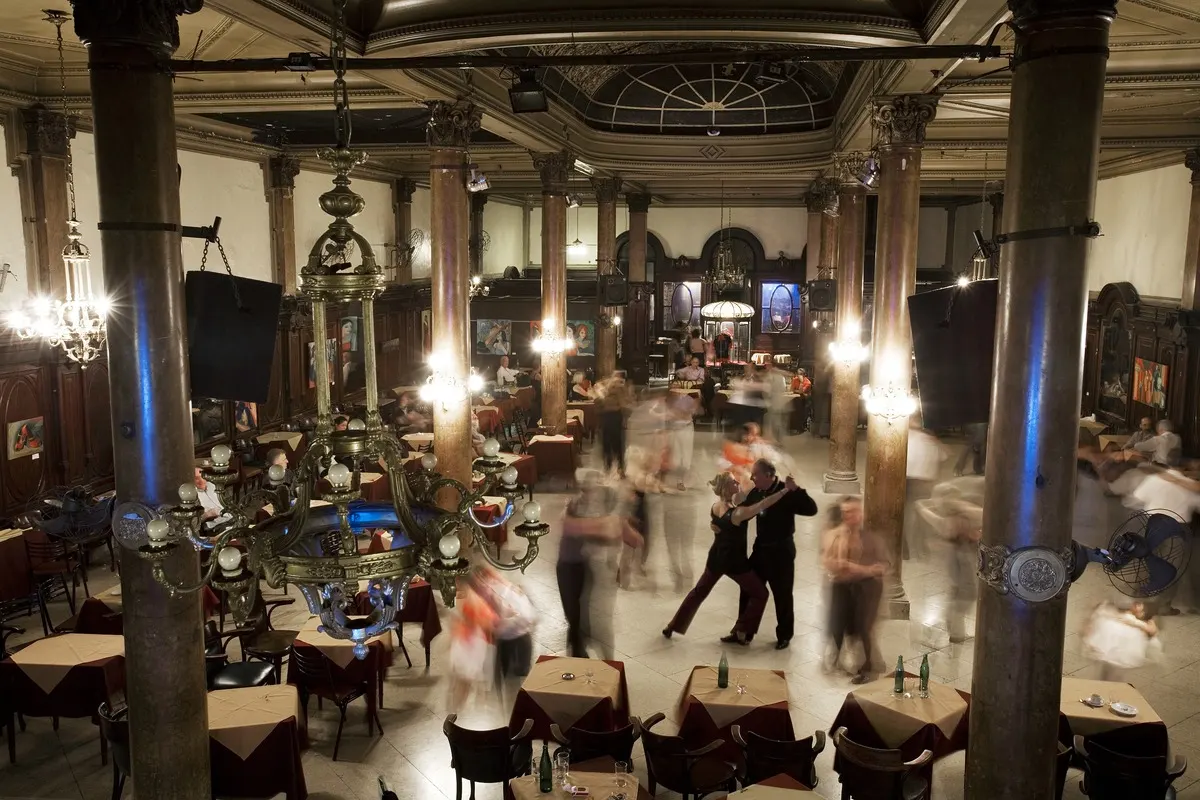
After the lesson, people dance in pairs to recorded or live music. On a busy floor, couples move around the room in a shared direction. Stay in your lane and take small steps to avoid other dancers. Save the stage-show moves for the stage. You can sit, listen and watch a set before joining in.
You may hear tanda for a set of songs and cortina for the brief musical break between sets. An invitation by cabeceo uses eye contact and a small nod from a distance. Return the nod to accept or simply look away to decline. At more informal nights, people may ask directly. Follow the room, take a “no” graciously, and if your partner asks to stop, thank them and leave the floor together.
What to wear and how much to budget
Choose clean, comfortable clothes and shoes that let you turn without sticking to the floor. There is no need to buy tango shoes for your first class. On the social floor, avoid soles that grip so hard a simple pivot becomes a battle, or shoes you can’t balance in. Follow any shoe rules in the school’s booking instructions. Courtesy will get you further than an elaborate outfit.
There is no dependable city-wide ticket price for a tango class or milonga. The tourism directory lists events, not a single live price list. School fees may differ from door admission, so ask the organiser about class cost, entry fee and payment method when you book. A dinner-and-show booking is a different purchase from entry to a participatory milonga; choose it if you want to watch performers rather than spend the night dancing.
Pick the evening that fits
The city directory includes events in Almagro and Balvanera, as well as Palermo, San Nicolás and other neighbourhoods. Filter by a night you can attend, then check the organiser’s listing for the current address and start time; nights and rooms can change. Arrive for the class on your first visit and you can get a feel for the room before it gets busy.
If you want to practise asking about a class, Spanish classes in Buenos Aires can help with the basics. For the journey home, use the Buenos Aires safety tips, especially if you finish late.
Questions Aussies ask
Can I go to a Buenos Aires milonga alone?
Yes. Ask the organiser if the beginner class takes solo learners and needs a booking. You can sit, listen and watch before dancing too.
What does cabeceo mean in tango?
It is a dance invitation made through eye contact and a nod. You can accept with a nod or decline by looking away.
Do I need tango shoes for a beginner lesson?
No. Wear stable, comfortable shoes that allow a turn, and follow any shoe guidance from the school you book.
Where can I find a milonga with beginner classes?
Use the Buenos Aires tourism milonga directory and set “¿Tiene clases?” to “Sí”. Then use the organiser’s listing to find the current class time and entry terms.
Sources
- Buenos Aires tourism: Milongas in the city · City’s day, neighbourhood and class filters; named event venues and listed sessions as at 29 September 2026
- Buenos Aires tourism: Passion for tango · Tango context and difference between social-dancing listings and staged venues
- Escuela Mundial de Tango: In-person classes · School, address and regular classes
- Escuela Mundial de Tango: Contact · Florida 656 first-floor address and direct school contact
- Tango Topics: Is Cabeceo Dead? · First-party tango instructor discussion of cabeceo and mirada as a distant, silent invitation; norms vary by dance night