How to drink mate in Argentina without derailing the round
Sip through the bombilla, then hand the vessel back to the cebador for a refill. Fill it three-quarters with yerba, start with warm water, and use 75–80°C water for drinking.
Updated · 6 min read
The short version
- Yerba fill
- About 3/4 of the vessel
- First wetting
- Around 50°C
- Drinking water
- 75–80°C
- Example yerba price
- ARS 5,000 (about AUD 4.69) for 1 kg, September 2026
To drink mate in Argentina, sip through the bombilla (filtered metal straw), finish the water in the gourd, and hand it back to the cebador (the person who prepares and serves it). For a first batch, fill the vessel three-quarters with yerba mate, wet one side with about 50°C water, then pour small refills at 75–80°C.
What are you being offered when someone says “¿Querés mate?”
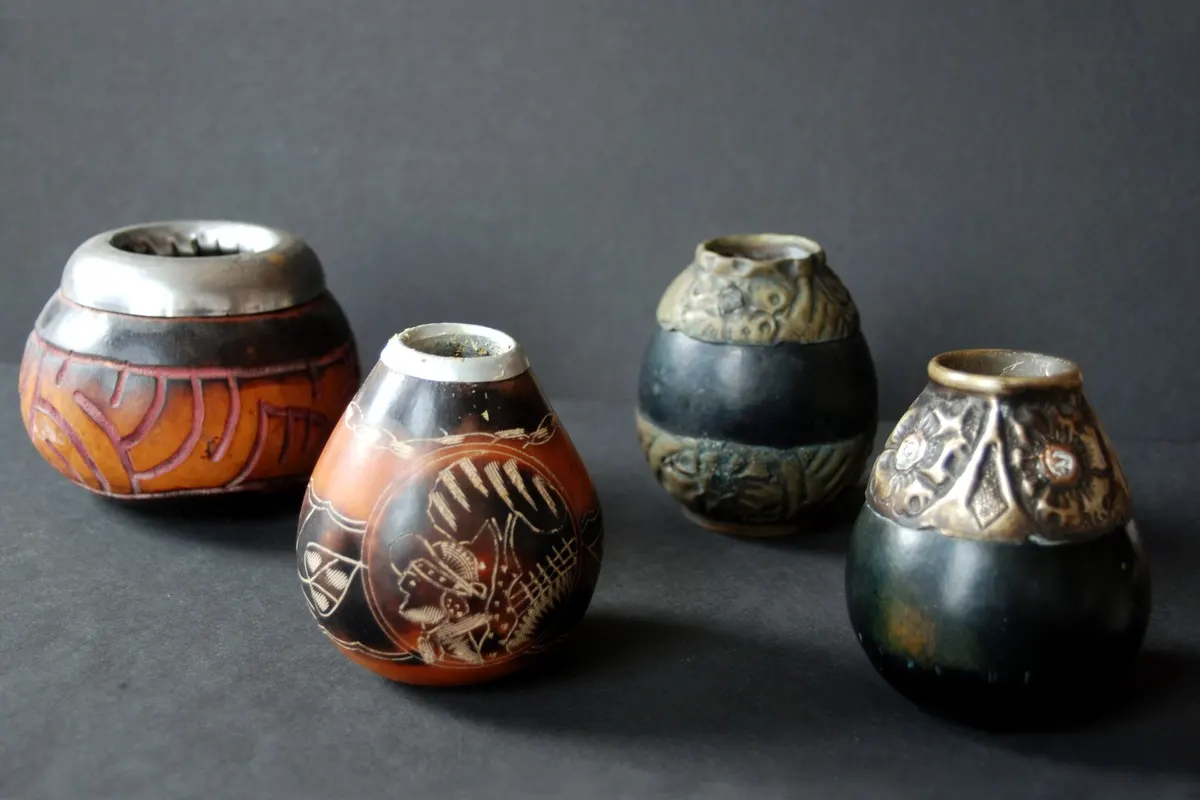
Mate names both the infusion of yerba mate leaves and the vessel it is drunk from. Argentina's cultural heritage register describes people drinking it alone or in a ronda (round), with one person preparing and serving it in turn. Its use goes back to the Guaraní peoples. Think of the chat over a cuppa back home, but with a shared vessel and someone in charge of the pours. “¿Querés mate?” means “Would you like mate?”
The basic kit is yerba (the dried plant material), a heat-safe mate vessel, a bombilla, hot water, and ideally a flask for refills. The national yerba-mate institute allows calabash, glass, wood, metal, or another suitable vessel. No need to buy a fancy gourd on day one. Plain yerba makes a bitter infusion. If the bitter first sip catches you out, tell your host instead of leaving a full mate stranded in the round.
How do you prepare a mate without burning the yerba?
The Instituto Nacional de la Yerba Mate (INYM) recommends keeping part of the yerba dry as you refill; its flavour releases gradually.
- Fill the vessel to about three-quarters with yerba. Cover its mouth with your hand, turn it over, shake gently, then tip the yerba so it slopes to one side at about 45°. That leaves a hollow at the lower edge.
- Pour a little warm water, around 50°C, into the hollow. Let it soak for a few seconds. This first wetting is separate from the hotter water used to drink it.
- Set the bombilla into the dampened hollow, leaning it against the vessel wall. Leave it in place; moving it about can disturb the bed of yerba and clog the filter.
- Add a little water at 75–80°C beside the bombilla, keeping the upper slope of yerba dry. Drink that serving, then refill in the same spot. Do not pour boiling water straight in.
Use a thermometer for INYM’s 75–80°C range and pour small amounts into the dampened side. After enough refills, the flavour fades and the mate is lavado (washed out). Change the yerba then. The number of good pours varies.
Who serves the round, and when do you say gracias?
The cebador prepares the mate, adds the water, and passes the vessel to each person in turn. Even in a group, one cebador handles the serving. Take the offered vessel, drink the water through the bombilla, and return it to the cebador for the next fill. Don't pass it straight to the next person or add your own water to someone else's round. Avoid stirring with the bombilla: the cebador set it in place deliberately.
A plain “gracias” when you are finished is the least ambiguous way to bow out; don't say it merely to acknowledge each refill if you still want another. If sharing one straw isn't comfortable, say “No, gracias” and drink from your own vessel. People can still sit and talk together without sharing equipment. For more words you may hear around the table, see the Argentine slang phrasebook.
What does a first mate setup cost in September 2026?
At Jumbo's online checkout on 29 September 2026, a listed 1 kg Cachamai yerba was ARS 5,000 (about AUD 4.69), while a listed 1 kg Baldo yerba was ARS 15,250 (about AUD 14.30). A Marwall stainless-steel bombilla was ARS 4,305 (about AUD 4.04). These prices apply to the listed products; check current stock and prices before buying. The AUD figures use Wise's displayed 29 September mid-market reference, AUD 1 = ARS 1,066.43; card conversion and delivery charges can change what you pay.
| Item, Jumbo online, 29 September 2026 | Listed ARS | Approx. AUD at Wise mid-market |
|---|---|---|
| Cachamai traditional yerba, 1 kg | 5,000 | 4.69 |
| Baldo yerba, 1 kg | 15,250 | 14.30 |
| Marwall stainless-steel bombilla | 4,305 | 4.04 |
A vessel is an additional purchase if you do not have a heat-safe cup. Those prices don’t tell you which yerba you’ll like. If you’re unsure about the bitterness, start with a small pack. The three-quarter fill refers to the vessel, not the shopping bag. Your 1 kg bag will last longer than one round. For another shared meal, see asado etiquette.
Is mate the same as mate cocido or tereré?
Traditional shared mate is brewed repeatedly in its vessel and drunk through a bombilla. INYM separately describes mate cocido (yerba steeped as a tea-like infusion, sometimes in a bag) and tereré (a cold version). Ask which one someone is offering rather than assuming every drink called mate comes with a straw or hot water. They all use yerba mate, but how you prepare and serve them changes.
Questions Aussies ask
How do I drink mate when someone hands me the gourd?
Sip through the bombilla until you have drunk the water, then hand the vessel back to the cebador. That person handles the next refill and passes it on.
What temperature should mate water be?
Use 75–80°C water for the drinking refills, according to INYM. Their traditional-mate method starts by moistening one side of the yerba with about 50°C water.
Do I say gracias after every mate?
Say gracias when you are finished with the round. If you want another refill, hand the vessel back to the cebador.
Can I have my own mate instead of sharing the straw?
Yes. Mate is also drunk individually, so you can decline a shared vessel with “No, gracias” and use your own.
How much does yerba mate cost in Buenos Aires?
At Jumbo online on 29 September 2026, a 1 kg Cachamai yerba cost ARS 5,000 (about AUD 4.69). A 1 kg Baldo was ARS 15,250 (about AUD 14.30); check current stock and prices.
Sources
- INYM, Yerba Mate Argentina: Mate tradicional · Three-quarter fill, 45° slope, 50°C wetting, 75–80°C serving
- Argentina.gob.ar: El mate · The infusion and its vessel; Guaraní history and sharing
- Argentina.gob.ar: Mate, cultural heritage register · A single cebador prepares and serves a shared round
- INYM, Yerba Mate Argentina: Cómo se prepara · Links to traditional mate, tereré, and mate cocido
- Jumbo: Cachamai traditional yerba, 1 kg · ARS 5,000 online listing retrieved 29 September 2026
- Jumbo: Baldo yerba, 1 kg · ARS 15,250 online listing retrieved 29 September 2026
- Jumbo: Marwall stainless-steel bombilla · ARS 4,305 online listing retrieved 29 September 2026
- Wise: AUD to ARS converter · Displayed mid-market AUD 1 = ARS 1,066.43 on 29 September 2026